
Wide Mummy vs Regular Mummy Sleeping Bags: Which Design Is Better?

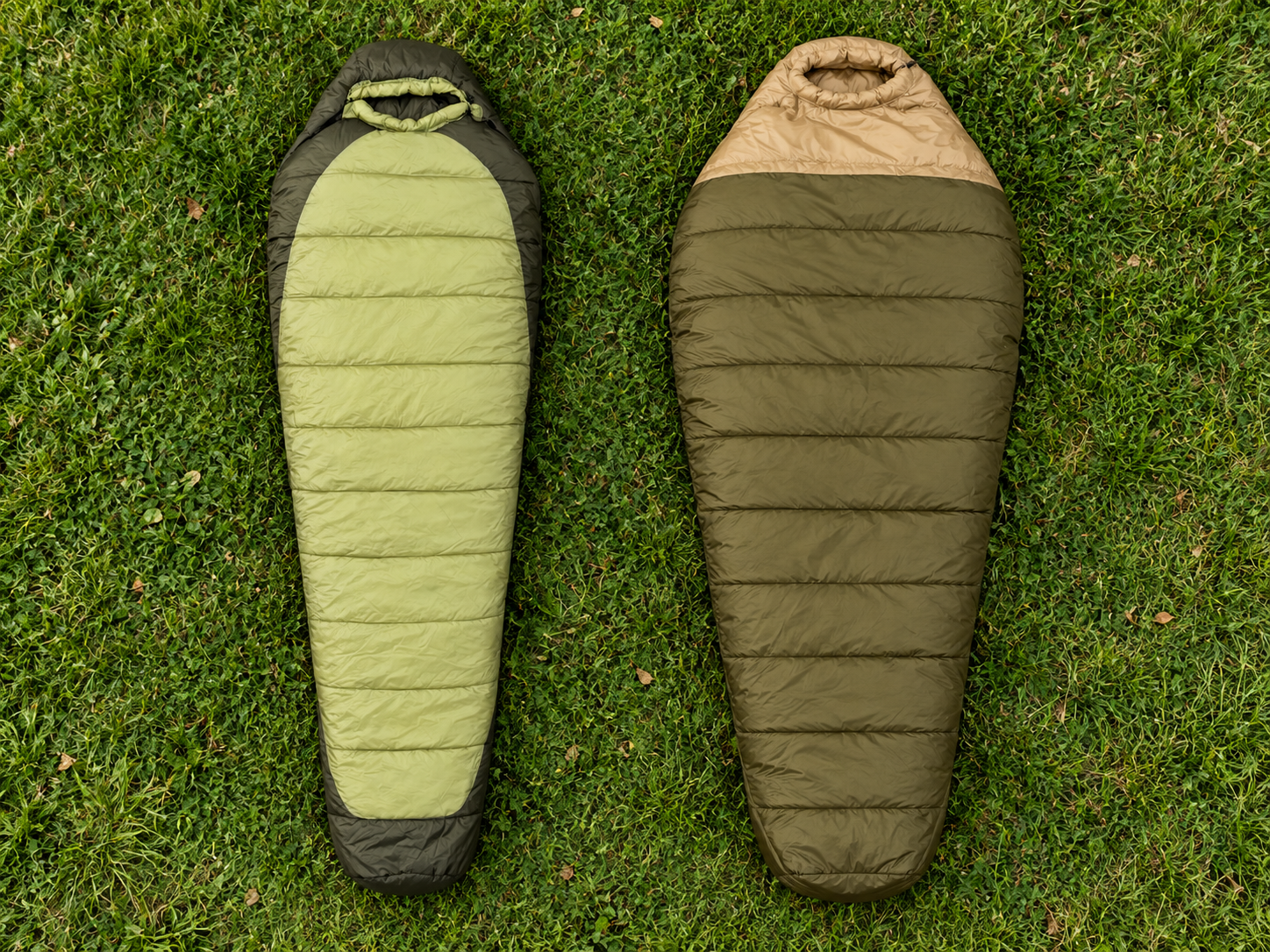
Choosing the right sleeping bag is not only about temperature ratings or insulation materials. The shape and fit also play an important role in outdoor comfort, warmth, and overall sleeping experience.
Traditional mummy sleeping bags are popular among backpackers because of their close-fitting shape and efficient heat retention. However, some campers find them too restrictive, especially when sleeping on their side or changing positions during the night.
This has created growing interest in wide mummy sleeping bags, which offer additional interior space while maintaining the familiar tapered design.
At TRAILVO, we believe that understanding these differences helps outdoor brands, retailers, and wholesale buyers develop sleeping bags that better match their target customers.
In this guide, we compare wide and regular mummy sleeping bags, explore their design advantages, and explain what buyers should consider when developing custom sleeping bag collections.
What Is a Regular Mummy Sleeping Bag?
A regular mummy sleeping bag features a body-contoured shape that is wider around the shoulders and gradually narrows toward the feet.
Unlike rectangular sleeping bags, this design reduces unnecessary interior space and helps limit heat loss.
Key Features of Regular Mummy Sleeping Bags
- Tapered construction for a closer body fit.
- Insulated hood for additional head protection.
- Narrower footbox to reduce excess space.
- Efficient use of insulation and shell materials.
- Compact construction for hiking and backpacking.
A regular mummy sleeping bag is often a practical choice for campers who prioritize portability and thermal efficiency.
However, the closer fit may limit movement for users with broader shoulders or those who prefer sleeping on their side.
For outdoor brands targeting lightweight hiking equipment markets, regular mummy designs remain an important product category.
What Is a Wide Mummy Sleeping Bag?
A wide mummy sleeping bag follows the same general tapered construction but provides additional room around selected areas of the body.
Depending on the design, manufacturers can increase the shoulder girth, hip circumference, or footbox dimensions to create a more comfortable sleeping environment.
Unlike fully rectangular sleeping bags, wide mummy models retain some body-contoured shaping.
Why Choose a Wider Fit?
One of the main advantages is improved freedom of movement.
Many campers naturally change sleeping positions during the night. A wider sleeping bag allows users to bend their knees, turn onto their side, or adjust their posture more easily.
This design may also appeal to:
- Side sleepers who need additional shoulder and hip space.
- Campers with broader body proportions.
- Recreational users who prioritize sleeping comfort.
- Outdoor brands developing comfort-focused product lines.
However, increasing the internal dimensions may also affect overall weight, insulation requirements, and packed volume.
The goal is to create enough room for comfortable movement without sacrificing practical thermal performance.
Wide Mummy vs Regular Mummy Sleeping Bags: Key Differences
Although both designs share a tapered construction, their performance can differ depending on dimensions, insulation, and intended applications.
| Feature | Regular Mummy | Wide Mummy |
|---|---|---|
| Body Fit | Close-fitting | More spacious |
| Shoulder Room | Standard | Increased |
| Footbox Space | Generally narrower | Can be enlarged |
| Side-Sleeping Comfort | More restrictive | Greater flexibility |
| Thermal Efficiency | Less excess interior space | Depends on fit and insulation |
| Product Weight | Generally lighter | Potentially heavier |
| Packed Volume | Usually smaller | May be larger |
| Main Application | Backpacking and hiking | Camping and comfort-focused hiking |
| OEM Customization | Standard dimensions | Adjustable body dimensions |
Important: A wide mummy sleeping bag is not automatically warmer or colder than a regular model. Actual thermal performance depends on insulation quality, construction, temperature rating, and how well the bag fits the user.
For wholesale buyers, these differences should be evaluated alongside the target market and product positioning.
How Does Sleeping Bag Width Affect Warmth?
One of the most common questions is whether a wider sleeping bag provides less warmth.
The answer depends on several design factors.
1. Interior Space and Heat Retention
A closer-fitting sleeping bag generally contains less unused interior space.
This can help improve thermal efficiency, particularly when the insulation and construction are designed for colder environments.
A wider sleeping bag creates additional room for movement. However, excessive interior space may make it harder to maintain a comfortable sleeping environment.
2. Insulation Distribution
Sleeping bag warmth depends heavily on the insulation system.
Both synthetic and down-filled sleeping bags can provide effective thermal protection when properly designed.
For wider models, manufacturers must consider the additional surface area and appropriate insulation distribution.
A poorly balanced design may create uneven insulation coverage or unnecessary weight.
Buyers comparing filling options can also read our Down vs Synthetic Sleeping Bags Guide.
3. Fit and Insulation Compression
A sleeping bag that is too narrow may compress its insulation around the shoulders, hips, or knees.
Compressed insulation generally provides less effective thermal protection.
For some campers, choosing a slightly wider design can improve both comfort and insulation loft.
Ultimately, the best fit should provide enough room for movement without creating excessive unused space.
Temperature performance should be verified through appropriate testing rather than estimated from shape alone.
Is a Wide Mummy Sleeping Bag Better for Side Sleepers?
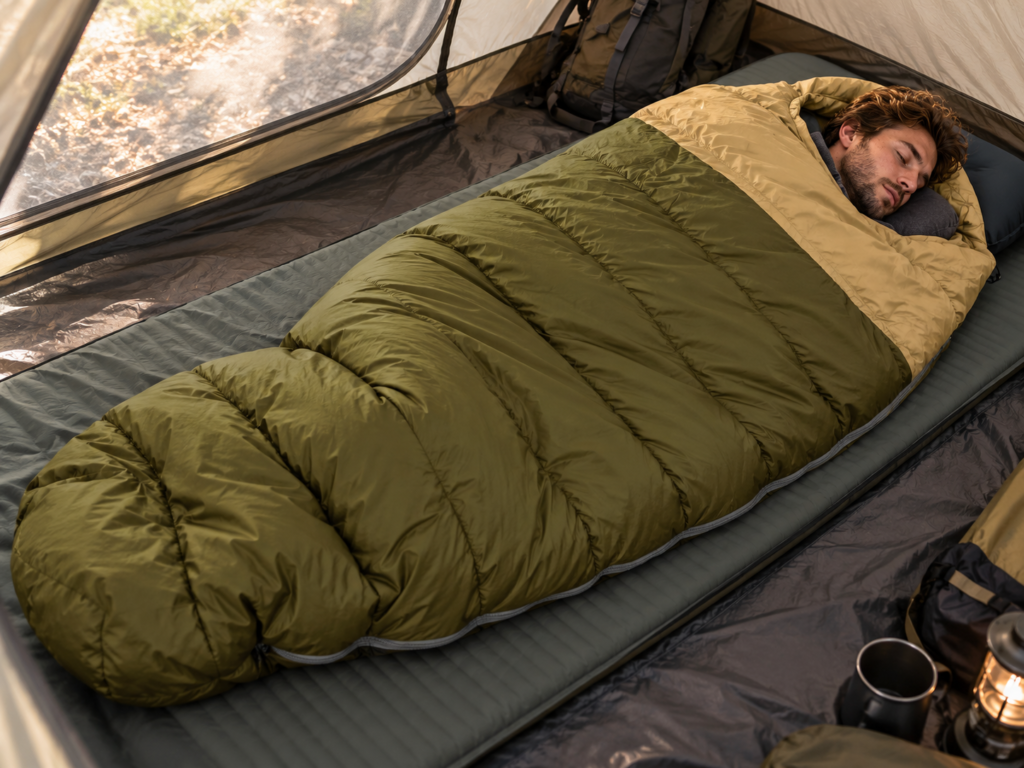
For many side sleepers, additional interior space can make a noticeable difference.
When lying on their side, campers often bend their knees or move their arms into more comfortable positions.
Traditional mummy sleeping bags may restrict these movements, depending on the user’s body dimensions.
Shoulder and Hip Room
A wider shoulder area provides additional space for upper-body movement.
Similarly, increased hip circumference can help accommodate bent knees and alternative sleeping positions.
However, manufacturers should avoid increasing every dimension without considering the intended user.
Footbox Design
The footbox is another important area.
A narrow footbox may restrict natural foot movement, while an enlarged design provides additional space.
For outdoor brands, footbox width and shape can become useful product differentiation features.
We recommend evaluating shoulder girth, hip measurements, and footbox dimensions together rather than focusing on sleeping bag width alone.
Weight and Packability: What Changes With a Wider Design?
Weight and packed size are important considerations for backpacking equipment.
A wider sleeping bag generally requires additional shell fabric, lining material, and potentially more insulation.
As a result, two sleeping bags using similar materials may have different finished weights.
However, the difference is not determined by width alone.
Fabric thickness, filling type, insulation weight, zipper construction, and overall length also influence the final product.
For lightweight backpacking collections, a regular mummy design may offer a better balance between weight and functionality.
For recreational camping products, additional sleeping comfort may be more valuable than minimizing every gram.
We suggest that buyers establish their target product weight and packed dimensions before finalizing the sleeping bag pattern.
OEM Sleeping Bag Manufacturing: What Can Buyers Customize?
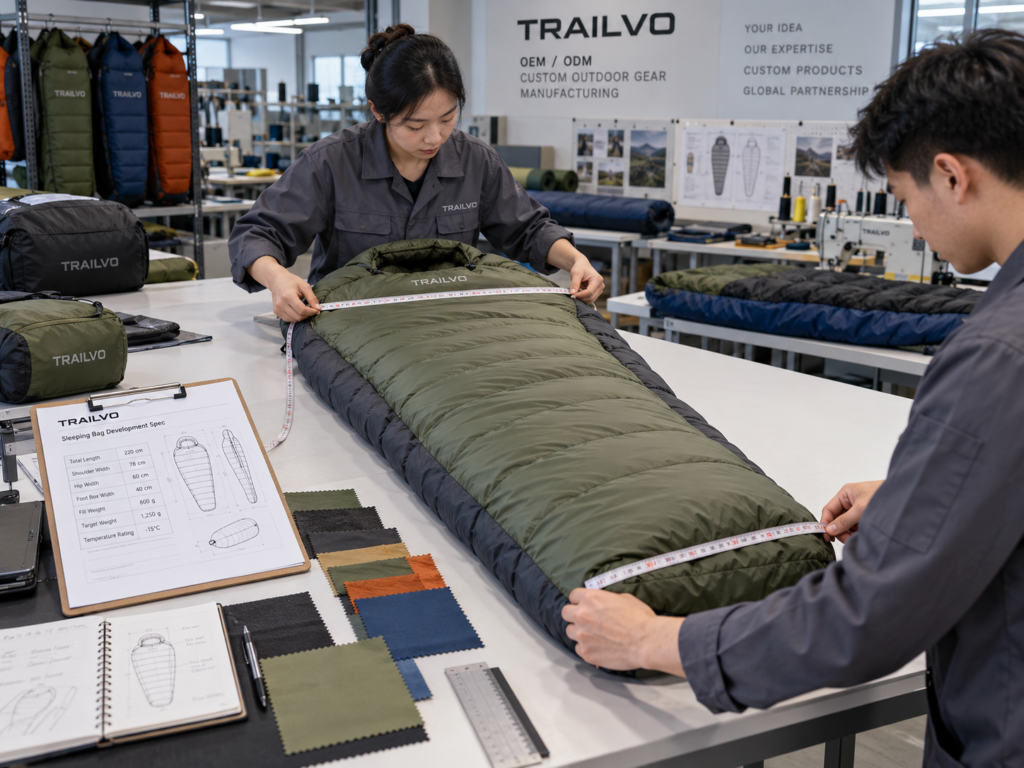
For outdoor equipment brands, sleeping bag shape offers an opportunity to develop products for different customer groups.
At TRAILVO, we support OEM and ODM sleeping bag manufacturing for importers, wholesalers, retailers, and private-label outdoor brands.
Our customization options include:
Custom Dimensions and Construction
We can discuss adjustments to overall length, shoulder width, hip dimensions, and footbox construction.
These changes help brands develop different fitting options for their intended markets.
Fabrics and Insulation
Buyers can select suitable shell fabrics, lining materials, and insulation specifications based on their product requirements.
Material selection should consider durability, comfort, thermal performance, and target pricing.
Branding and Packaging
Custom colors, logos, woven labels, compression sacks, and retail packaging can help create a consistent brand identity.
For businesses exploring available designs, our Mummy Sleeping Bag for Adults provides a useful starting point for discussing specifications and customization requirements.
How Should Outdoor Brands Choose Between the Two Designs?
We recommend evaluating three factors before developing a new sleeping bag collection.
Target Customers: Lightweight backpackers may prefer close-fitting designs, while recreational campers may prioritize freedom of movement.
Product Positioning: Regular mummy models can support compact hiking collections. Wide mummy designs may suit comfort-oriented camping ranges.
Manufacturing Requirements: Additional width can affect material consumption, finished weight, packaging dimensions, and production costs.
For new product development, we suggest requesting samples and evaluating fit, comfort, and construction before confirming bulk production.
Frequently Asked Questions
Are wide mummy sleeping bags warmer?
Not necessarily. Warmth depends on insulation, fit, construction, and tested temperature performance. A wider design may improve comfort but does not automatically increase warmth.
Are wide mummy sleeping bags suitable for backpacking?
Yes. A wide mummy sleeping bag can be suitable for backpacking when its weight, packed size, and insulation meet the user’s requirements.
Can manufacturers customize mummy sleeping bag dimensions?
Yes. OEM manufacturers can develop different lengths, shoulder widths, hip measurements, and footbox dimensions according to agreed specifications.
Is a wide mummy better than a rectangular sleeping bag?
It depends on the intended use. Wide mummy sleeping bags offer a balance between tapered construction and comfort, while rectangular designs generally provide more unrestricted interior space.
For a detailed comparison, read our Mummy vs Rectangular Sleeping Bag Guide.
Conclusion: Which Mummy Sleeping Bag Design Is Better?
Neither design is universally better.
Regular mummy sleeping bags are practical for customers who value compact construction, lower weight, and efficient insulation.
Wide mummy sleeping bags offer additional movement space and may provide greater comfort for side sleepers and recreational campers.
For outdoor brands, the right decision depends on customer preferences, target specifications, and product positioning.
At TRAILVO, we help businesses explore sleeping bag designs that balance comfort, functionality, and manufacturing requirements.
Looking for a Reliable Sleeping Bag Manufacturer?
TRAILVO provides OEM and ODM sleeping bag manufacturing solutions for outdoor brands, importers, and wholesale distributors.
Whether you need regular mummy sleeping bags, wider customized designs, or private-label camping equipment, we can discuss suitable materials, dimensions, and production options.