
Down vs Synthetic Sleeping Bags: A Guide for Wholesale Buyers

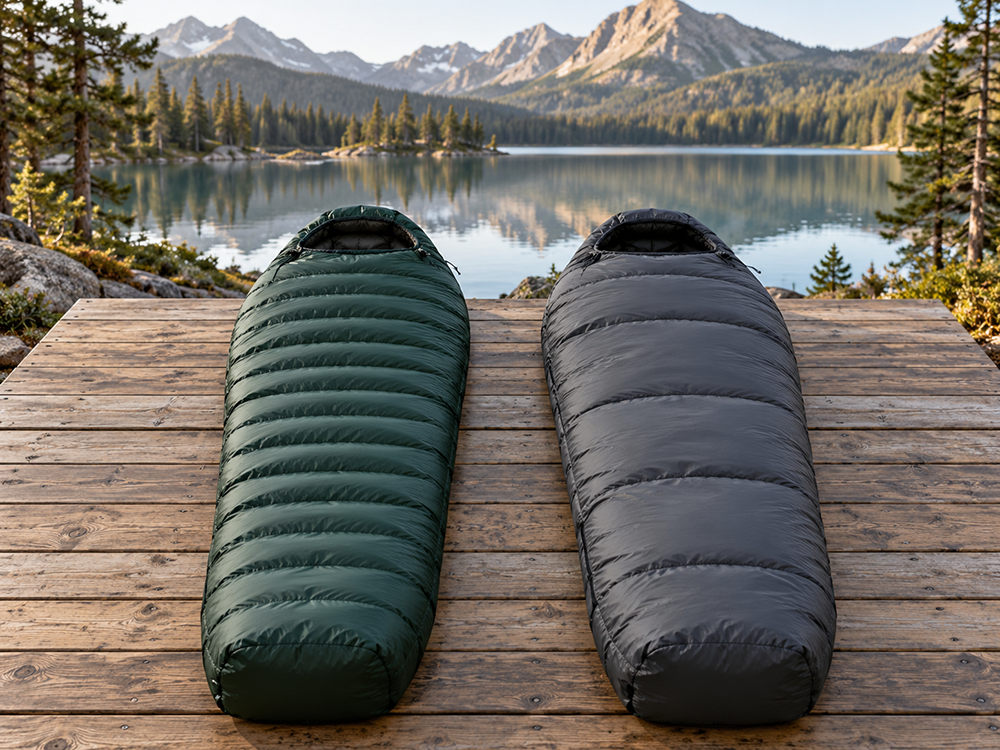
Choosing between down and synthetic sleeping bags is an important decision when developing an outdoor product range. Insulation affects product weight, packed size, moisture performance, and cost—all factors that influence how buyers position and sell their products.
Down generally suits ranges where low weight and compact storage are priorities. Synthetic insulation is often a practical option for affordable camping products and damp conditions. The right choice depends on your customers, intended use, and finished product specifications.
Down and Synthetic Insulation: What’s the Difference?
Down insulation uses the soft clusters beneath the outer feathers of ducks or geese. These clusters create loft that traps air. Synthetic insulation typically uses polyester fibers to create a similar insulating structure.
Both materials can be used in sleeping bags for different seasons. Neither filling type alone determines whether a bag is suitable for winter: insulation quantity, construction, fit, and tested temperature performance also matter.
Down vs Synthetic Sleeping Bags: Quick Comparison
| Factor | Down Sleeping Bags | Synthetic Sleeping Bags |
|---|---|---|
| Weight | Usually lighter for comparable warmth | Usually heavier for comparable warmth |
| Packed Size | Generally compresses into a smaller package | Generally requires more storage space |
| Moisture Performance | Loses insulating performance when wet | Generally retains insulation better when damp |
| Drying | Typically takes longer to dry | Typically dries faster |
| Cost | Often higher, particularly with higher fill power | Often more affordable, depending on specifications |
| Care | Requires suitable cleaning and thorough drying | Often simpler to maintain; follow product instructions |
| Product Positioning | Lightweight and compact outdoor ranges | Value-focused camping and general outdoor ranges |
These are general tendencies. Compare finished samples with similar dimensions and temperature ratings before making a purchasing decision.
When Should Buyers Choose Down Sleeping Bags?
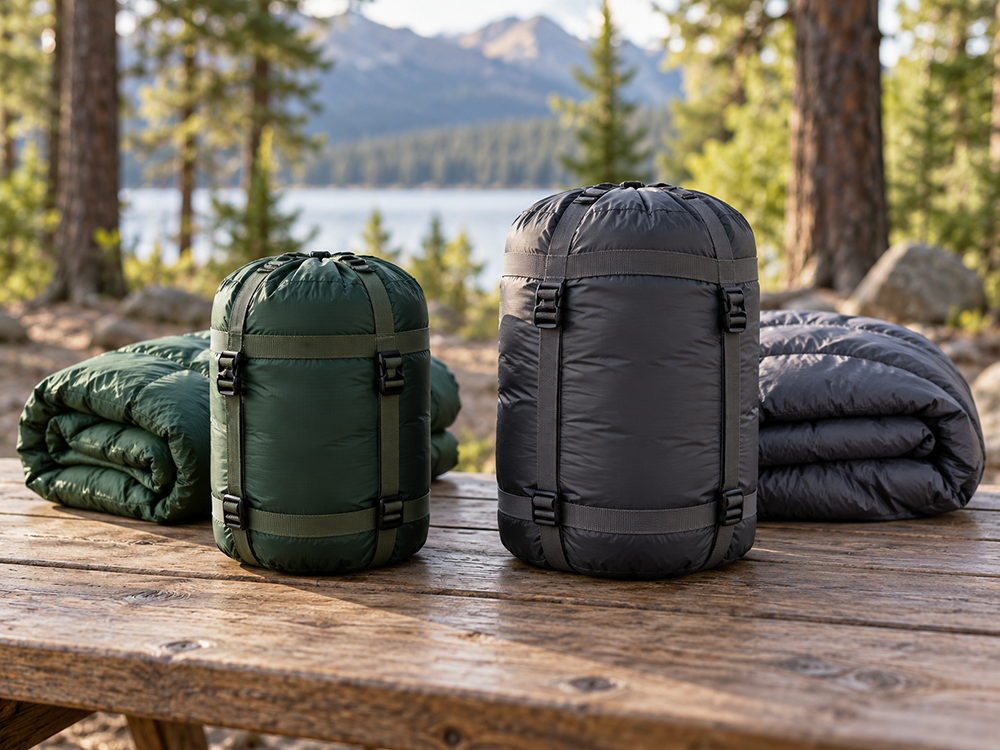
Down is worth considering when your customers prioritize carrying weight and packing space. This can make it suitable for backpacking collections and premium outdoor ranges.
When evaluating a down sleeping bag, ask about both fill power and fill weight. Fill power describes loft, while fill weight indicates how much down the bag contains. A higher fill-power number does not, by itself, prove that a finished sleeping bag is warmer.
Buyers should also confirm the down composition, filling distribution, and fabric construction. These details help make quotations more comparable and reduce misunderstandings during sampling.
For products promoted with responsible sourcing claims, request supporting documentation that applies to the supplied materials and order. Avoid using certification claims without verified evidence.
When Should Buyers Choose Synthetic Sleeping Bags?
Synthetic insulation is worth considering for camping collections where affordability and moisture tolerance are important. It can also suit customers who place less emphasis on the smallest possible packed size.
However, “synthetic filling” is a broad description. Buyers should request the exact fiber type, filling weight, and construction instead of assuming all synthetic bags perform alike.
For rental or frequently cleaned products, discuss the intended washing routine with the manufacturer. Check the care label and evaluate a sample after cleaning before committing to a bulk order.
Is Down Always Warmer Than Synthetic?
No. Either material can be used to produce a warm sleeping bag. Down’s advantage is generally its warmth relative to weight and packed volume, rather than a guarantee of greater warmth in every product.
A heavily insulated synthetic bag may be warmer than a lightly filled down bag. Likewise, a higher fill-power down bag may still contain too little insulation for the buyer’s intended conditions.
Compare temperature ratings on the same basis. Where standardized testing is available, request the report and distinguish comfort ratings from limit ratings. Do not treat an extreme rating as a normal sleeping temperature.
Does a Water-Resistant Shell Make the Sleeping Bag Waterproof?
A water-resistant shell and moisture-tolerant insulation are different features.
Water-resistant fabric may help with light moisture, but it does not automatically make the finished bag waterproof. Ask what testing supports the claim and whether it applies to the fabric or the complete product.
Water-repellent down treatments can improve moisture resistance, but buyers should still plan to keep sleeping bags dry.
What Should Wholesale Buyers Confirm Before Ordering?
Prepare a clear specification sheet before requesting quotations.
1. Intended Use and Customer Group
Define whether the collection targets backpackers, family campers, rental operators, or another customer group. Specify the expected conditions and desired product positioning.
2. Insulation and Temperature Claims
Confirm the filling type, quantity, and distribution. Request evidence for advertised temperature ratings and ensure product labels match the approved specifications.
3. Dimensions, Weight and Packing
Check finished dimensions, usable internal space, total weight, and packed size. Clarify whether quoted weight includes the storage bag.
4. Materials and Construction
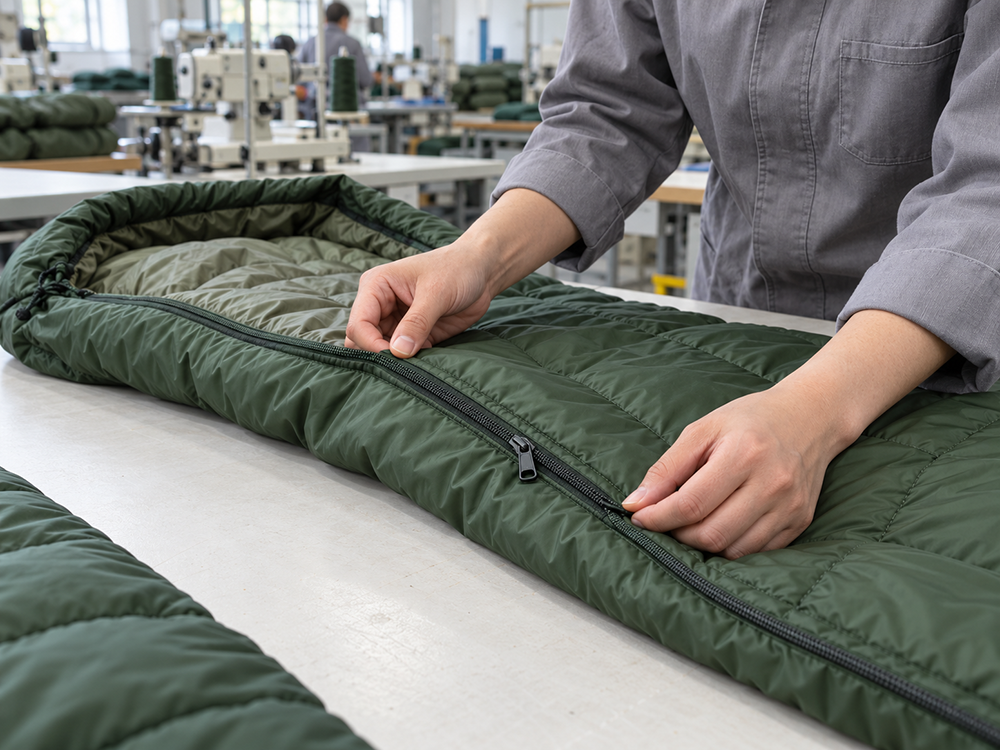
Review shell and lining fabrics, stitching, zipper operation, and filling consistency. Evaluate the complete sample rather than approving materials separately.
5. Branding and Packaging
Agree on logo placement, labels, care instructions, and individual packaging. Confirm which customization options are included in the quotation.
6. Sampling and Bulk Approval
Confirm minimum order requirements, sample costs, production timing, and inspection arrangements. Keep an approved sample and written specifications as the reference for bulk production.
For more supplier evaluation advice, read our guide to choosing a sleeping bag manufacturer.
Which Insulation Should You Include in Your Product Range?
Start with the needs of your target customers.
Choose down when low weight and compact packing are central to your offer. Consider synthetic insulation when affordability and performance in damp conditions are stronger priorities.
Some brands may benefit from offering both, with clear differences in intended use and specifications. Compare approved samples and total landed costs before deciding how to structure the range.
Explore our sleeping bag collection to discuss suitable models for your business.
Frequently Asked Questions
Are synthetic sleeping bags suitable for winter?
They can be, provided the finished bag has sufficient insulation and appropriate temperature performance. Synthetic filling alone does not establish winter suitability.
Does higher fill power mean a warmer down sleeping bag?
Not necessarily. Fill power describes loft. Filling quantity, construction, and other design factors also affect the finished bag’s warmth.
Which sleeping bag is better for damp conditions?
Synthetic insulation generally handles damp conditions better than untreated down. Actual performance depends on the filling and construction, and either type should be kept as dry as possible.
Which type is better for wholesale purchasing?
Neither is universally better. Match insulation to your target customers, required specifications, selling price, and product positioning.
Can sleeping bags be customized for an outdoor brand?
Discuss your requirements with the manufacturer, including dimensions, fabrics, filling, colors, branding, and packaging. Confirm feasibility and order requirements during sampling.
Looking for a Reliable Sleeping Bag Manufacturer?
TRAILVO manufactures sleeping bags for outdoor brands, wholesalers, and distributors. Tell us your target market, preferred insulation, and product requirements so we can discuss suitable models and customization options.