
Sleeping Bag Buying Guide: How to Choose the Right One

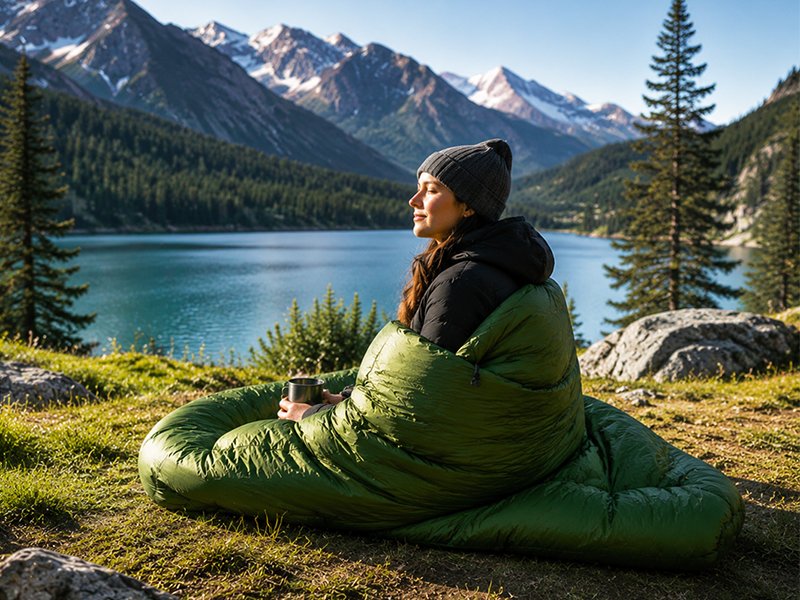
Knowing how to choose the right sleeping bag can make a major difference in warmth, comfort, and sleep quality during a camping trip. A high-quality sleeping bag not only keeps you warm during cold nights but also improves your overall camping experience. However, with so many options available in different materials, shapes, sizes, and temperature ratings, selecting the perfect sleeping bag can be confusing, especially for beginners.
Whether you are planning a weekend camping trip, a family outdoor adventure, a hiking journey, or a professional expedition, understanding your needs will help you choose the best sleeping bag. This guide will explain the key factors to consider, including camping environment, insulation materials, sleeping bag shapes, and different user groups.
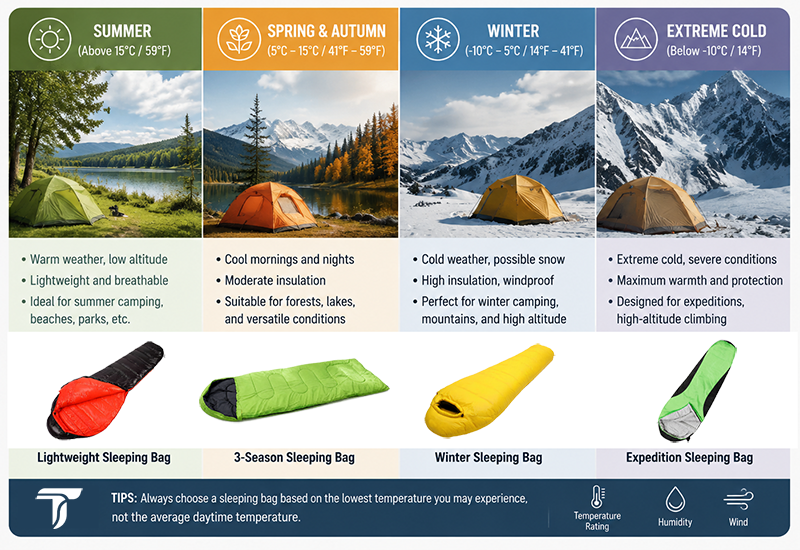
1. Consider the Season and Camping Environment
The first step in choosing a sleeping bag is understanding where and when you plan to use it. Different seasons and outdoor environments require different levels of warmth and protection.
For summer camping, a lightweight, breathable sleeping bag is usually the best choice. Summer sleeping bags are designed for warm weather conditions and provide enough comfort without causing overheating. They are ideal for camping in low-altitude areas, on beaches, in parks, and in mild outdoor environments.
For spring and autumn camping, a three-season sleeping bag is a more versatile option. These sleeping bags provide better insulation and can handle cooler nights, making them suitable for forests, mountains, and outdoor trips where temperatures may change significantly.
Not sure whether you need more warmth? See our guide to choosing between a 3-season and winter sleeping bag.
In addition to the season, you should consider the camping location. A humid environment may require a sleeping bag with moisture-resistant fabric, while windy areas may require better windproof protection. Understanding the climate and terrain of your destination will help you select the right sleeping bag.
2. Choose the Right Insulation Material
The insulation material inside a sleeping bag determines its warmth, weight, durability, and price. The two most common types are synthetic insulation and down insulation.
Synthetic Insulation Sleeping Bags
Synthetic sleeping bags are popular among beginners and casual campers because they are affordable, durable, and easy to maintain. Synthetic fibers can still provide warmth even in slightly wet conditions, making them a practical choice for humid environments or unpredictable weather.
They are also easier to clean and dry faster than down sleeping bags. For family camping, outdoor festivals, car camping, and general recreational use, synthetic sleeping bags are often the most cost-effective choice.
Down Insulation Sleeping Bags
Down sleeping bags are known for excellent warmth-to-weight performance. They are lightweight, highly compressible, and provide superior insulation, making them popular among hikers, backpackers, and professional outdoor travelers.
High-quality down sleeping bags can offer outstanding warmth while taking up less space in your backpack. However, they require more careful maintenance and perform less effectively when wet unless they have special water-resistant treatments.
When choosing insulation, consider your activity style, budget, and expected weather conditions. Synthetic insulation is suitable for everyday outdoor use, while down insulation is better for lightweight travel and extreme conditions.
3. Choose the Right Sleeping Bag Shape
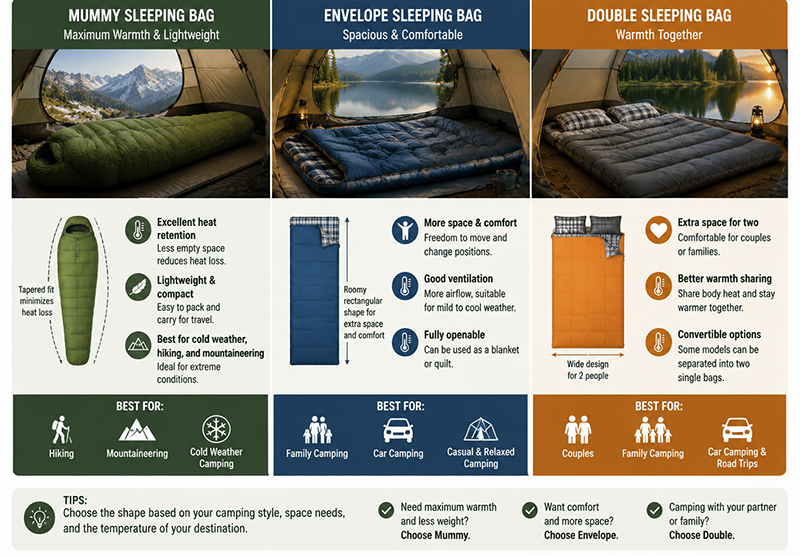
Sleeping bags come in several shapes, and each design offers different advantages in comfort, warmth, and mobility.
Mummy Sleeping Bags
Mummy sleeping bags are designed with a narrow shape that follows the body’s natural contours. They provide excellent heat retention because there is less empty space inside the bag, reducing heat loss.
This shape is ideal for backpackers, hikers, and cold-weather campers who need maximum warmth with minimum weight. Many professional outdoor enthusiasts prefer mummy sleeping bags for mountain climbing and long-distance trekking.
Explore our Mummy Sleeping Bags for camping, outdoor retail, and OEM/ODM sourcing.
Envelope Sleeping Bags
Envelope sleeping bags have a wider rectangular design, offering more space and freedom of movement. They are comfortable for people who prefer a relaxed sleeping position.
They are commonly used for family camping, indoor camping, RV trips, and casual outdoor activities. Although they provide more comfort, they may not retain heat as efficiently as mummy-style sleeping bags.
Double Sleeping Bags
Double sleeping bags are designed for two people and provide a comfortable sleeping solution for couples or families. They offer extra space and warmth sharing, making them ideal for romantic camping trips, car camping, and outdoor vacations.
Some double sleeping bags can also be separated into two individual sleeping bags, providing more flexibility for different situations.
Still deciding between these two designs? Read our complete Mummy Sleeping Bag vs Rectangular Sleeping Bag comparison to understand the differences in warmth, space, weight, and camping use.
Explore our Sleeping Bags collection to discover a range of styles for camping, retail, wholesale, and OEM & ODM projects.
4. Select the Right Sleeping Bag for Different User Groups
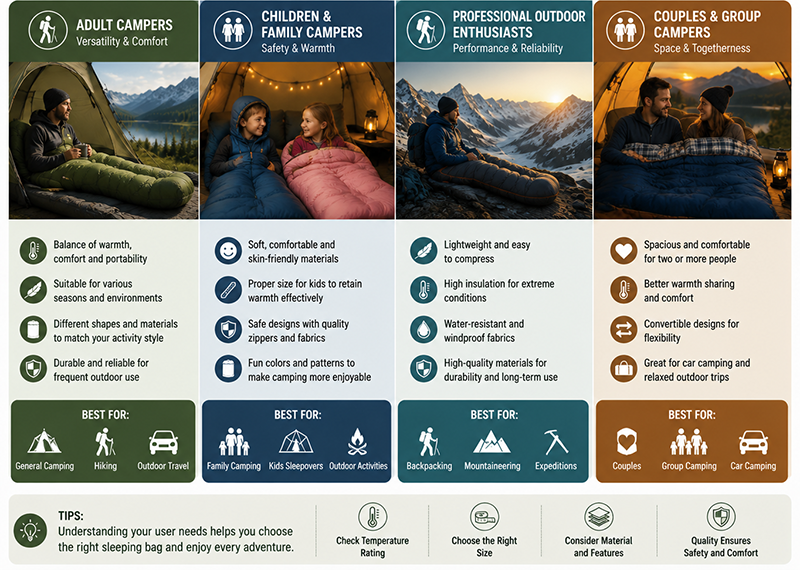
Different users have different requirements, so choosing a sleeping bag based on the user group is important.
Adult Campers
Adult sleeping bags should balance warmth, comfort, durability, and portability. For regular camping trips, outdoor travel, and hiking, adults should choose a sleeping bag based on their preferred activities and local climate.
Children and Family Campers
Children’s sleeping bags should prioritize safety, comfort, and proper sizing. A sleeping bag that is too large may reduce warmth because children lose body heat faster in extra space. Lightweight designs with soft materials and easy-to-use features are ideal for family camping.
For family and outdoor markets, explore our Kids’ Sleeping Bags.
Professional Outdoor Enthusiasts
For hikers, backpackers, and adventure travelers, weight and performance are critical. They usually need sleeping bags with excellent insulation, compact packing size, and reliable protection against changing weather conditions.
5. Check Temperature Rating
Temperature rating is another important factor when purchasing a sleeping bag. Most sleeping bags include a recommended temperature range to indicate the conditions they are designed for.
Always choose a sleeping bag based on the lowest temperature you expect to experience, rather than the average daytime temperature. It is better to select a sleeping bag with slightly higher warmth performance to ensure a comfortable night’s sleep.
6. Consider Size, Weight, and Portability
The size and weight of a sleeping bag directly affect your outdoor experience. Backpackers need lightweight sleeping bags that compress into a small size, while car campers may prefer larger, more comfortable models.
A good sleeping bag should provide enough space for comfortable sleeping while still being practical to carry and store.
7. What to Look for in a Sleeping Bag
The outer fabric plays an important role in durability and weather protection. Water-resistant, breathable, and durable fabrics can improve the lifespan of a sleeping bag.
Additional features such as adjustable hoods, internal pockets, high-quality zippers, draft collars, and compression bags can also improve convenience and comfort during outdoor activities.
When choosing a sleeping bag, look beyond warmth alone. Check the temperature rating, insulation type, shell and lining materials, zipper quality, size, weight, and packed volume. Features such as adjustable hoods, draft tubes, internal pockets, water-resistant fabrics, and compression sacks can also improve comfort and convenience.
For backpacking, weight and packability are especially important, while car campers may prefer more space and comfort. The right combination of these features depends on where, when, and how you plan to use the sleeping bag.
How Do You Know If a Sleeping Bag Is Good?
A good sleeping bag should provide the right balance of warmth, comfort, weight, and durability for its intended use. Start by checking whether the temperature rating matches the conditions you expect, then consider the insulation, shape, materials, zipper construction, and overall fit.
A quality sleeping bag should keep you comfortably warm without being unnecessarily heavy or bulky. Mummy sleeping bags generally provide better thermal efficiency, while rectangular sleeping bags offer more room to move. Durable shell fabrics, smooth zippers, secure stitching, and practical features such as draft tubes and adjustable hoods are also signs of a well-designed sleeping bag.
Ultimately, a good sleeping bag is not simply the warmest option. It should match the season, climate, sleeping style, and intended outdoor activity.
How to Choose a Sleeping Bag for Different Activities
Camping
For general camping, prioritize comfort, durability, and a suitable temperature rating. Rectangular or envelope sleeping bags are practical choices when weight is not the main concern.
Backpacking
For backpacking, choose a lightweight and compressible sleeping bag with a good warmth-to-weight ratio. Mummy sleeping bags are often preferred because their fitted shape reduces weight and improves heat retention.
Cold-Weather Camping
For colder conditions, focus on an appropriate temperature rating, efficient insulation, a fitted shape, and features such as an insulated hood and draft protection.
Conclusion
Choosing the right sleeping bag starts with understanding where and how you plan to use it. Consider the temperature rating, insulation, shape, size, weight, materials, and overall comfort before making a decision.
For general camping, comfort and durability may be the priority, whereas backpackers usually benefit from lighter, more compressible designs. Cold-weather campers should pay particular attention to insulation and temperature performance.
By matching these features to your environment and activity, you can choose a sleeping bag that provides the right balance of warmth, comfort, and portability.
Need a Reliable Sleeping Bag Manufacturing Partner?
Custom sleeping bag solutions for outdoor brands, wholesalers and distributors.