
Picnic Blanket vs Beach Blanket: What’s the Difference?


Picnic blankets and beach blankets may look similar, but they are designed for different outdoor environments. A picnic blanket usually focuses on comfort and protection from damp ground, while a beach blanket is often designed to be lightweight, easy to clean, and suitable for sandy conditions.
Understanding these differences can help you choose the right blanket for picnics, camping, beach trips, and other outdoor activities.
What Is a Picnic Blanket?
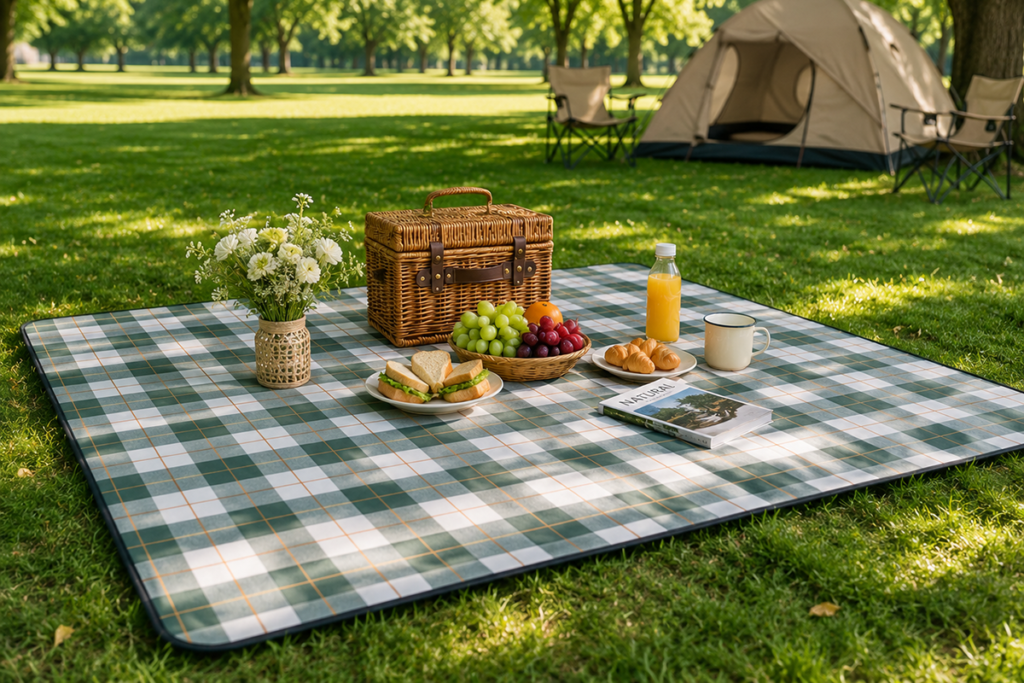
A picnic blanket is designed to provide a comfortable and clean surface for sitting, eating, and relaxing outdoors.
It is commonly used in parks, gardens, campsites, festivals, and other grassy areas. Many picnic blankets feature a soft or padded top layer combined with a waterproof or moisture-resistant backing.
Common materials include polyester, Oxford fabric, fleece, acrylic, and PEVA.
For families or groups, larger sizes such as 150 × 200 cm and 200 × 200 cm provide more space for people, food, and outdoor accessories.
What Is a Beach Blanket?
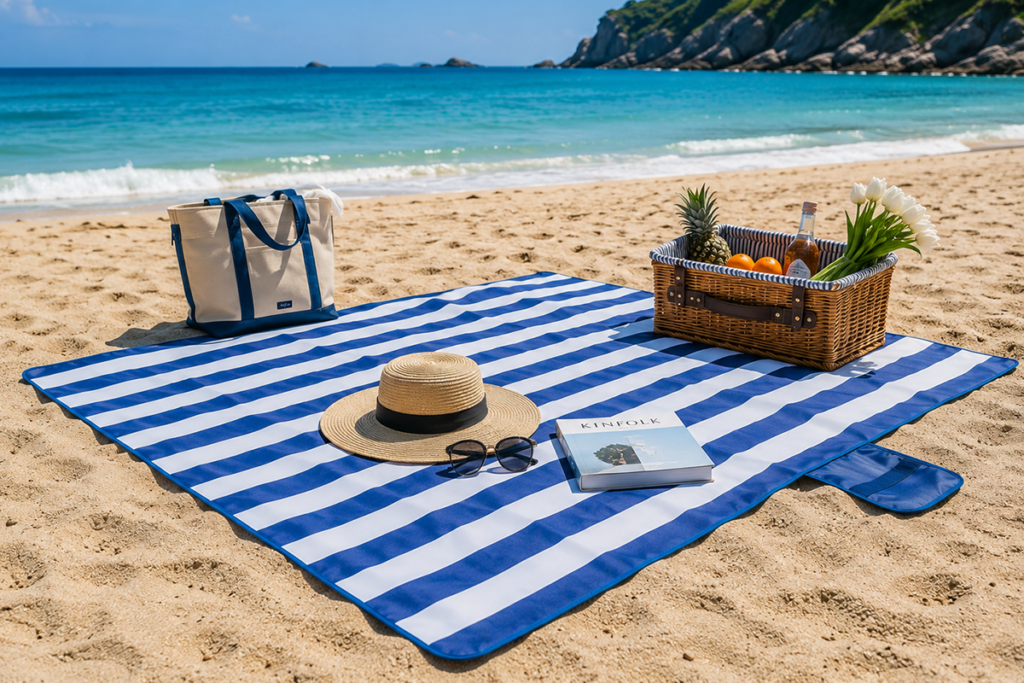
A beach blanket is designed mainly for beaches, seaside picnics, and other sandy environments.
Compared with traditional picnic blankets, beach blankets are often lighter and easier to pack. Smooth polyester or nylon fabrics are commonly used because they dry quickly and make it easier to shake or brush dry sand away.
Some beach blankets also feature waterproof or water-resistant construction to help protect against damp sand and ground moisture.
Picnic Blanket vs Beach Blanket: Key Differences
| Feature | Picnic Blanket | Beach Blanket |
|---|---|---|
| Best For | Parks, grass, camping | Beach, sand, seaside |
| Main Feature | Comfort & ground protection | Portability & sand resistance |
| Surface | Soft or padded | Smooth & lightweight |
| Waterproofing | Often waterproof backing | Water-resistant options |
| Sand Resistance | Moderate | More important |
| Portability | Foldable | Lightweight & compact |
| Comfort | Higher cushioning | Usually thinner |
| Cleaning | Wipe or wash | Easy to shake clean |
The biggest difference is the environment each blanket is designed for.
Materials and Comfort
Picnic blankets often prioritise comfort. Soft upper materials and padded layers can make sitting on grass or harder ground more comfortable.
A waterproof or moisture-resistant backing is also useful for protecting against damp grass and soil.
Beach blankets usually prioritise lightweight, quick-drying materials. Polyester and nylon are popular choices because they are durable, portable, and relatively easy to clean after use on sand.
If comfort is your main priority, a picnic blanket may be the better option. If portability and easy sand removal are more important, a beach blanket is usually more practical.
Waterproof vs Sand-Resistant
Both picnic and beach blankets can offer moisture protection, but their requirements differ slightly.
For picnic blankets, waterproof backing helps protect against wet grass and damp ground.
For beach blankets, the surface should ideally allow dry sand to be easily shaken or brushed away. Water-resistant materials are also useful when the blanket is placed on damp sand.
Keep in mind that waterproof and sand-resistant are different features. A waterproof blanket is not automatically sand-resistant, and a lightweight sand-friendly beach blanket may not always be fully waterproof.
What Size Should You Choose?
The right size depends on how many people will use the blanket.
- 130 × 150 cm: suitable for 1–2 people
- 150 × 150 cm: suitable for couples or small picnics
- 150 × 200 cm: suitable for small families
- 200 × 200 cm: suitable for families and groups
Larger blankets provide more space but usually require more storage room. For travel and beach trips, it is worth considering both the open size and folded size.
Can You Use a Picnic Blanket at the Beach?
Yes. A waterproof picnic blanket can also be used at the beach, especially for occasional trips.
However, soft fleece or textured surfaces may hold more sand and can be heavier to carry.
If you frequently visit beaches, a dedicated lightweight beach blanket may be more convenient.
Can You Use a Beach Blanket for Picnics?
Yes. Beach blankets can also work well for parks, camping, festivals, and casual picnics.
Their lightweight construction makes them easy to carry, although they may provide less cushioning than padded picnic blankets.
For short trips and travel, this versatility can make a portable beach blanket a practical option.
Which One Should You Choose?
Choose a picnic blanket if you mainly need:
- Comfortable seating on grass
- Waterproof ground protection
- Extra cushioning
- Space for family picnics and camping
Choose a beach blanket if you mainly need:
- Easy sand removal
- Lightweight portability
- Quick drying
- Compact storage for travel
If you plan to use your blanket in both environments, look for a versatile design that combines moisture protection, easy cleaning, and convenient portability.
Custom Picnic & Beach Blankets for Outdoor Brands
For retailers, wholesalers, and outdoor brands, picnic and beach blankets can be customised for different markets and applications.
TRAILVO provides flexible OEM & ODM options including custom sizes, materials, colors, patterns, logos, and packaging.
Explore our Picnic Mats for camping, parks, and outdoor gatherings, or discover our Beach Blankets & Mats designed for beach trips and seaside activities.
Conclusion
Picnic blankets and beach blankets serve similar purposes but are optimized for different environments.
Picnic blankets generally focus on comfort, cushioning, and protection from damp ground, while beach blankets prioritize lightweight portability, easy cleaning, and better performance on sand.
Choosing the right option depends on where it will be used most often. For brands and retailers, selecting the right materials, size, construction, and features can also help create products that better match different outdoor markets.