
3 Season vs Winter Sleeping Bag: Which One Should You Choose?

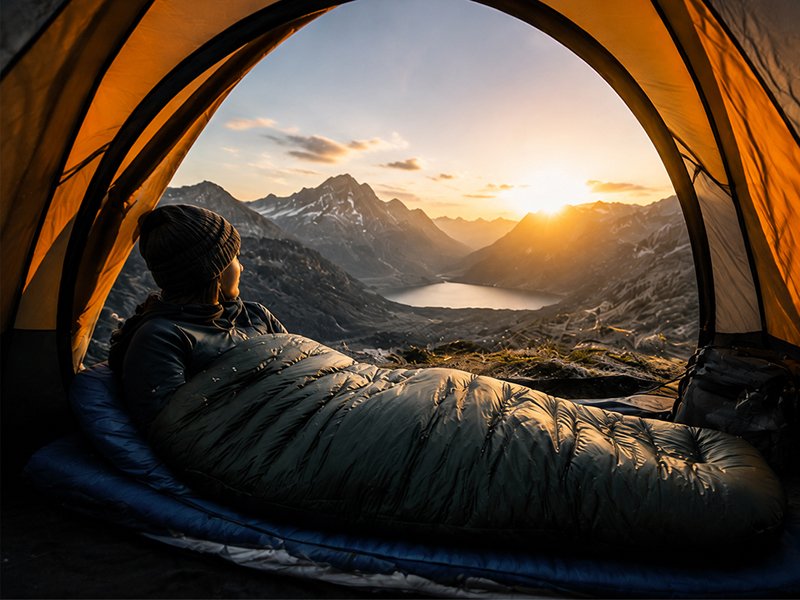
Choosing between a 3-season sleeping bag and a winter sleeping bag can make a big difference in warmth, comfort, weight, and overall camping performance. Both types are designed for different temperatures, weather conditions, and outdoor environments.
Understanding the differences between them will help you select the right sleeping bag for your adventures and avoid feeling too cold or carrying unnecessary weight. For a complete overview of sleeping bag selection, check out our Sleeping Bag Buying Guide: How to Choose the Right One
What Is a 3 Season Sleeping Bag?
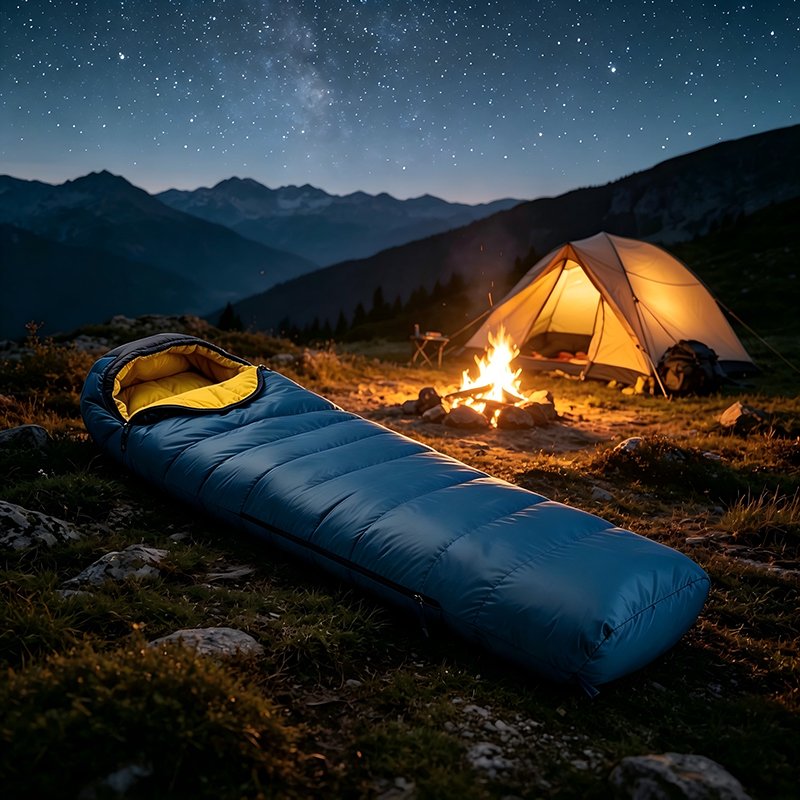
A 3-season sleeping bag is designed for spring, summer, and autumn camping. It provides a balance between warmth, weight, and versatility, making it one of the most popular choices for outdoor activities.
Many 3-season sleeping bags are designed for mild to cool conditions, often around 0°C to 10°C, depending on insulation, construction, and the manufacturer’s temperature rating.
Key features of 3-season sleeping bags include:
- Lightweight and easy to carry
- Good balance between warmth and breathability
- Suitable for changing weather conditions
- Versatile for hiking, backpacking, and general camping
For most casual campers and outdoor travelers, a 3-season sleeping bag offers enough warmth without adding extra weight to their gear.
What Is a Winter Sleeping Bag?
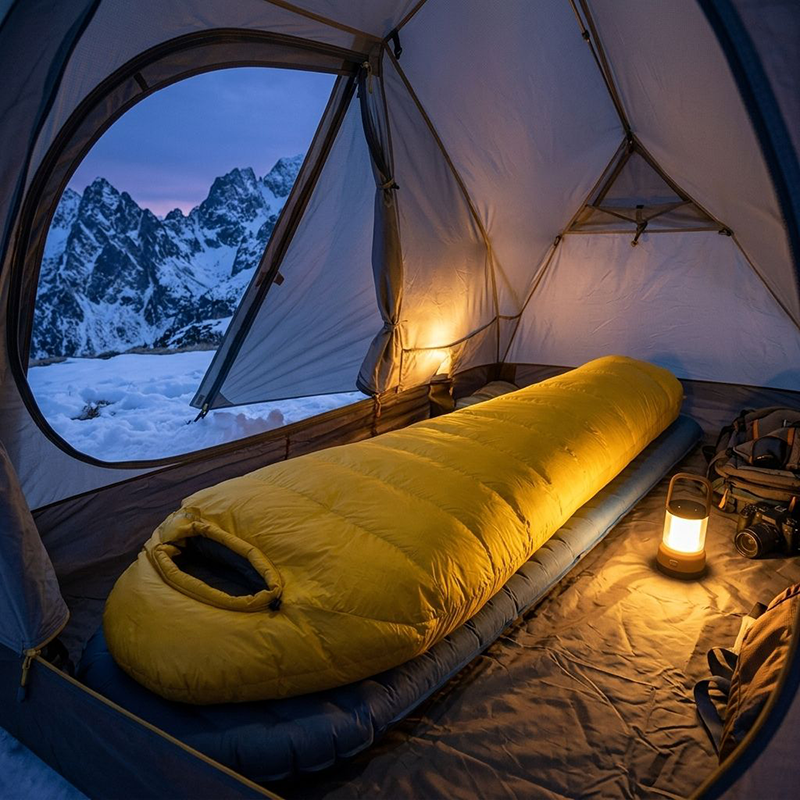
A winter sleeping bag is designed for cold environments and extreme outdoor conditions. It provides stronger insulation and better heat retention compared with a 3-season sleeping bag.
Winter sleeping bags are designed for colder conditions, often below 0°C, but actual performance depends on the insulation, construction, and certified temperature rating.
They are commonly used for:
- Winter camping
- Snow camping
- High-altitude trekking
- Mountain expeditions
- Cold-weather adventures
Key features of winter sleeping bags include:
- Thicker insulation for maximum warmth
- Better protection against cold wind and low temperatures
- Hooded designs to reduce heat loss
- More durable outer fabrics for harsh environments
Although winter sleeping bags provide excellent warmth, they are usually heavier and larger due to the added insulation.
For colder outdoor conditions, I suggest exploring our down sleeping bag, which offers a lightweight insulation option for cold-weather camping.
Main Differences Between 3 Season and Winter Sleeping Bags
| Feature | 3-Season Sleeping Bag | Winter Sleeping Bag |
|---|---|---|
| Temperature Use | Mild to cool conditions | Freezing and colder conditions |
| Insulation | Moderate insulation | Thicker, higher insulation |
| Filling Material | Synthetic or down | Synthetic or high-loft down |
| Weight | Generally lighter | Generally heavier |
| Packed Size | Usually more compact | Often larger |
| Design | Mummy or rectangular | Often mummy with insulated hood |
| Portability | Good for hiking and travel | Depends on insulation and design |
| Best For | Spring, summer and autumn camping | Winter, snow and cold-weather camping |
| OEM/ODM Options | Custom size, fabric, logo and colors | Custom insulation, fabric, logo and design |
Note: Actual warmth, weight and packed size vary by product. Always check the tested temperature rating and insulation specifications.
1. Temperature Rating
The biggest difference is the temperature range.
A 3-season sleeping bag is suitable for mild to cool weather, while a winter sleeping bag is designed for colder conditions. When choosing a sleeping bag, always consider the lowest temperature you may experience during your trip.
Selecting a sleeping bag with the correct temperature rating ensures better comfort and safety.
2. Insulation Level
Winter sleeping bags use more insulation to prevent heat loss during freezing temperatures. They often have thicker filling, improved construction, and additional features such as draft collars and insulated hoods.
3-season sleeping bags use less insulation, making them lighter and easier to pack while still providing sufficient warmth for most outdoor activities.
3. Weight and Portability
For backpackers and hikers, weight is an important factor. A 3-season sleeping bag is usually lighter and more compact, making it easier to carry during long-distance trips.
Winter sleeping bags require more insulation, so they are generally heavier and take up more space in a backpack.
4. Camping Environment
Your camping location should influence your choice.
Choose a 3-season sleeping bag if you plan to camp in:
- Spring and autumn conditions
- Mild summer nights
- Forests and low-altitude areas
- Family camping trips
Choose a winter sleeping bag if you plan to camp in:
- Snowy environments
- High mountains
- Cold regions
- Freezing temperatures
Which Sleeping Bag Is Better for Different Users?
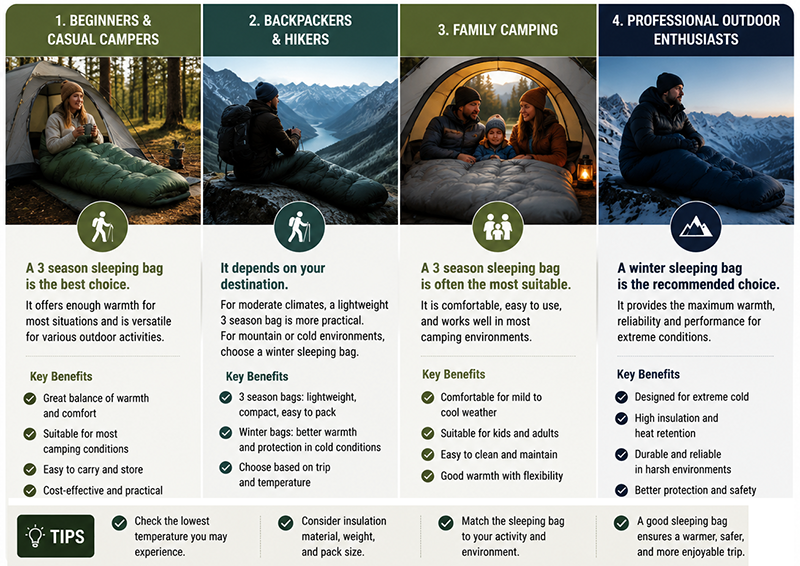
For Beginners and Casual Campers
A 3-season sleeping bag is usually the better choice. It provides enough warmth for most camping situations and offers better flexibility for different outdoor activities.
For Backpackers and Hikers
The choice depends on the destination. If you mainly travel in moderate climates, a lightweight 3-season sleeping bag is more practical. For mountain trekking or cold-weather adventures, a winter sleeping bag provides better protection.
For Family Camping
A 3-season sleeping bag is often suitable for family outdoor trips because it is comfortable, easy to use, and works well in most camping environments.
For Professional Outdoor Enthusiasts
Winter sleeping bags are recommended for explorers facing extreme weather who need reliable warmth and performance.
Quick Decision Guide: Which One Should You Choose?
Choose a 3-season sleeping bag if you camp mainly in spring, summer, or autumn, prefer lower weight, and need a versatile option for general camping or backpacking.
Choose a winter sleeping bag if you expect freezing temperatures, snow, high-altitude conditions, or extended cold-weather exposure.
Always check the product’s temperature rating and consider your personal cold tolerance before choosing.
Temperature is only one part of choosing the right sleeping bag. Shape also affects warmth, space, and packability, so you may want to compare mummy vs rectangular sleeping bags.
Conclusion
The choice between a 3-season and a winter sleeping bag depends on your camping environment, travel style, and expected temperatures.
A 3-season sleeping bag is the best all-around option for spring, summer, and autumn camping, offering a great balance of comfort, weight, and versatility. A winter sleeping bag is the better choice for cold-weather adventures where maximum warmth and protection are required.
By understanding the differences between these two types, you can choose the right sleeping bag and enjoy a warmer, safer, and more comfortable outdoor experience.
Looking for a Reliable Sleeping Bag Manufacturer?
TRAILVO provides OEM & ODM sleeping bag solutions for outdoor brands, wholesalers, retailers, and distributors. From 3-season and winter sleeping bags to materials, insulation, colors, sizes, logos, labels, and packaging, we support flexible customization for different markets.